


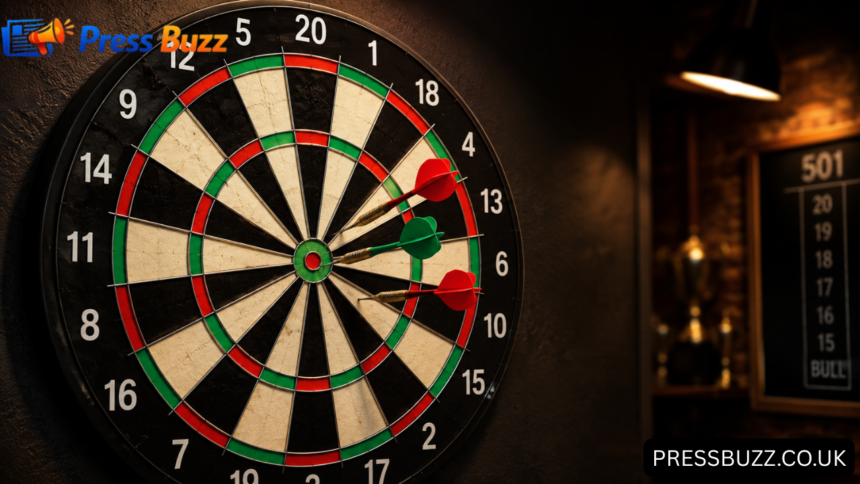
A dart board can bring the excitement of the oche into a home, games room, pub-style space or dedicated practice area. Whether you are learning the basics or working on your consistency, choosing the right board can make every session more enjoyable. Modern buyers can select from traditional bristle designs, electronic systems, soft tip models and magnetic options, with each type offering different benefits for different players and playing environments.
- What Makes a Good Dart Board?
- Types of Dart Boards to Consider
- How to Choose the Best Dart Board
- Dart Board Height and Distance
- Dart Board Measurements for Home Use
- Dart Board Surround and Wall Protection
- Dart Board Light and Visibility
- Electronic and Soft Tip Dart Boards
- Popular Dart Board Choices
- Best Dart Board for Different Players
- Dart Board Safety Tips
- Maintaining Your Dart Board
- Common Dart Board Buying Mistakes
- Dart Board Set and Accessories
- Conclusion
- Frequently Asked Questions
The best dart board for your needs will depend on several factors, including your experience, available space, budget and preferred dart type. Serious players may prioritise durable sisal, thin wiring and regulation-style measurements, while families might prefer automatic scoring or safer designs. Understanding these differences before buying can help you choose equipment that performs well, lasts longer and creates a more enjoyable darts experience at home.
What Makes a Good Dart Board?
A quality dart board should provide a durable playing surface, clearly defined scoring segments and reliable construction. Traditional bristle boards are commonly manufactured from compressed sisal fibres, which are designed to close around dart holes after use. This self-healing characteristic can help maintain the surface when the board is used regularly, although rotating the board and spreading play across different segments is still important for long-term maintenance.
The wiring also deserves attention when comparing different models. Thinner systems can reduce the amount of surface covered by metal and potentially reduce bounce-outs caused by darts striking the wire. A strong mounting system is equally important because movement can affect throwing consistency. For home players, a good dart board should combine durability, clear visibility, secure installation and compatibility with the type of darts being used.
Types of Dart Boards to Consider
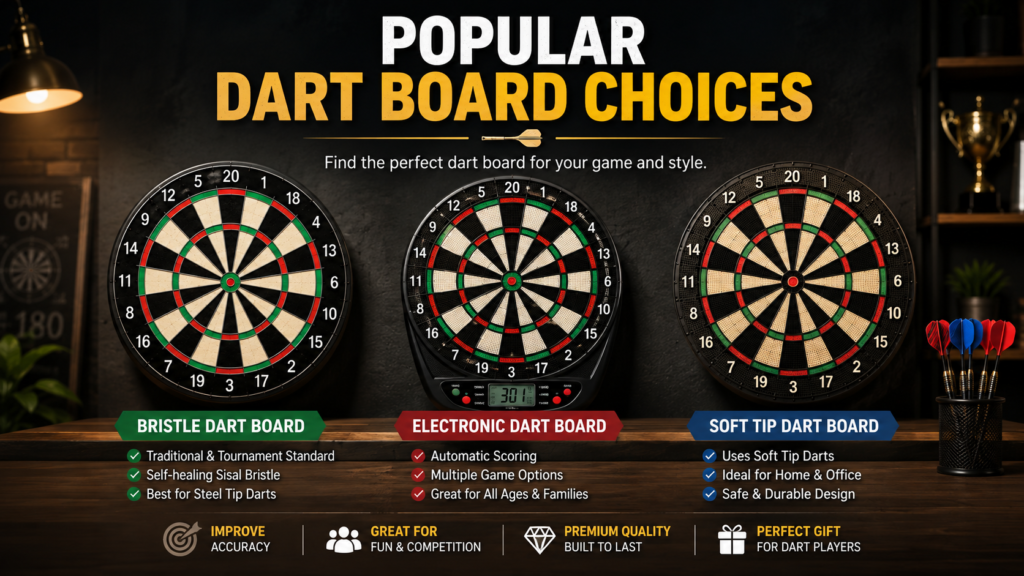
Traditional bristle boards remain one of the most popular choices for players who want a classic darts experience. They are generally designed for steel-tip darts and can be used for casual games, structured practice and competitive-style training. A well-made board provides a familiar playing surface and encourages players to develop accurate throwing habits without relying on electronic scoring or built-in game systems.
An electronic dart board offers a different experience, particularly for families and casual players. These systems can automatically calculate scores and often include multiple games, player settings and training modes. Soft tip dart boards use plastic-tipped darts and are commonly associated with electronic systems. Meanwhile, a magnetic dart board or kids dart board can offer a more approachable option for younger players where reducing the risks associated with sharp steel-tip darts is a priority.
How to Choose the Best Dart Board
Choosing the best dart board starts with understanding how frequently you intend to play. Someone practising several times a week may benefit from a premium sisal board with strong construction and a quality wiring system. A casual player who enjoys occasional games may not need professional-level specifications. Considering expected usage before purchasing helps prevent spending too much on features that may never be used.
The playing environment should also influence your decision. Measure the available wall area and consider whether you need a dart board surround, additional lighting or a freestanding support system. Players living in rented accommodation may prefer a dart board stand because it avoids permanent wall mounting. Families should also consider who will use the board, as an electronic, soft tip or magnetic model may be more suitable for mixed-age groups.
Dart Board Height and Distance
Correct dart board height is essential for anyone wanting to develop a consistent throwing technique. For a standard steel-tip setup, the centre of the bullseye is positioned 1.73 metres above the floor. Measuring from the correct point helps create a consistent playing environment and allows players to practise with conditions that closely reflect recognised competition standards. A board that is too high or too low can make practice less reliable.
The distance from dart board to the throwing line is also an important measurement. For standard steel-tip darts, the recognised throwing distance is 2.37 metres from the face of the board to the oche. Players setting up a home board should measure carefully rather than estimating the distance. Getting both dart board height and distance correct creates a more authentic experience and helps players build dependable throwing habits.
Dart Board Measurements for Home Use
Understanding dart board measurements makes installation much easier and helps prevent mistakes. The standard playing surface is approximately 451 millimetres in diameter, while the overall setup requires additional space around the board for comfortable throwing and safety. Players should also consider the distance behind and beside the throwing area, particularly when several people are likely to use the board at the same time.
A home setup should be arranged so that the thrower has enough room to stand comfortably and other people can remain outside the active playing zone. A dart board surround can protect surrounding walls from missed darts, while a dart board light can improve visibility across the scoring segments. If drilling into a wall is not practical, a stable dart board stand can provide a flexible alternative.
Dart Board Surround and Wall Protection
A dart board surround is a practical accessory for many home installations, especially when beginners or children are using the board. It fits around the outside edge and provides additional protection against darts that miss the scoring surface. This can help reduce marks and holes in painted walls, making it particularly useful in bedrooms, games rooms and other areas where protecting the surrounding surface matters.
Surrounds can also give a home setup a more polished appearance. When choosing one, check that its internal opening matches the board and that the material is thick enough to provide suitable protection. Although a surround cannot replace safe throwing practices, it can reduce some of the damage caused by inaccurate throws. Combining wall protection with correct installation creates a more practical environment for regular play.
Dart Board Light and Visibility
A dart board light can make a noticeable difference to the overall playing experience. Uneven room lighting can create shadows across the segments, making numbers harder to read and affecting visual focus. Dedicated lighting systems are designed to illuminate the board more consistently, allowing players to see the target clearly without relying entirely on overhead room lights.
Good lighting becomes particularly useful during serious practice sessions because players need to identify specific scoring areas quickly. When selecting a dart board light, consider brightness, positioning, installation and whether the system creates distracting reflections or shadows. A well-lit board can complement a quality playing surface and make a home setup feel closer to a dedicated darts environment.
Electronic and Soft Tip Dart Boards
An electronic dart board can be a strong choice for households where convenience and variety are important. Automatic scoring removes the need for manual calculations and can make games easier for beginners. Many electronic models also provide different game modes, allowing players to experiment with formats beyond traditional scoring. This can make them particularly attractive for social gatherings and family entertainment.
Soft tip dart boards are generally used with plastic-tipped darts and are often designed around electronic scoring systems. They can provide a different feel from traditional steel-tip boards, so players should consider what type of darts experience they want before purchasing. Serious steel-tip players may prefer a conventional bristle board for practice, while recreational users may appreciate the convenience and variety offered by electronic alternatives.
Popular Dart Board Choices
A target dart board can refer either to a board designed for practice or to products associated with the Target brand, so buyers should always check the exact product specifications. Target has a strong presence in the darts market, with products aimed at players across different experience levels. Comparing materials, wiring, dimensions and included accessories is more useful than choosing a product based solely on its branding.
Interest in a Luke Littler dart board can also come from fans who follow professional darts and want equipment connected with prominent players. Similarly, searches for a Paddy Power dart board may relate to branded or promotional products. An Omni dart board can appeal to people interested in smart darts technology and digital features, while a Star Wars dart board may be more suitable for fans seeking a decorative or themed addition to a games room.
Best Dart Board for Different Players
The best dart board for a beginner should be straightforward, durable and easy to install. Traditional bristle models can provide a strong introduction to steel-tip darts, while electronic boards may be preferable for players who enjoy automatic scoring and multiple game formats. Beginners should focus on learning good throwing technique rather than buying equipment with unnecessary advanced features that may add to the cost.
For children, a kids dart board should be selected with age and safety in mind. Magnetic designs can provide an alternative to sharp steel-tip darts, while some electronic systems are designed for younger or family audiences. Experienced players may want a professional-style board with durable sisal and reduced-wire systems. Ultimately, the right choice depends on the player’s goals, playing frequency, available room and preferred darts format.
Dart Board Safety Tips
Safety should be considered before installing any dart board, particularly when steel-tip darts are involved. The throwing area should remain clear while a player is taking a turn, and children, pets and spectators should stay away from the active zone. Darts should never be left on the floor because they can create a serious hazard when someone walks through the room unexpectedly.
Wall protection can provide another useful safety and practical benefit. A dart board surround can catch some missed darts, while proper lighting can help players see the target more clearly. The board should also be securely mounted or supported by a stable stand. After playing, darts should be collected and stored safely rather than left attached to the board or scattered around the room.
Maintaining Your Dart Board
Regular maintenance can help extend the useful life of a traditional board. Players should rotate a bristle board periodically so that darts do not repeatedly hit the same sections. Concentrating practice on one area can create uneven wear, while distributing throws around the board helps the playing surface remain more consistent. Gentle care is preferable to aggressive cleaning or unnecessary handling of the sisal fibres.
Players should also inspect the board from time to time for worn areas, damaged wiring or loose mounting components. If the surface becomes heavily worn, replacing the board may provide a better playing experience than continuing to use a damaged one. Keeping the playing environment dry and storing darts correctly can also contribute to longer equipment life and better overall performance.
Common Dart Board Buying Mistakes
One of the most common mistakes is selecting a board purely because it has the lowest price. While affordability matters, extremely basic products may not provide the durability or consistency required by frequent players. Buyers should compare the construction, intended use, dart compatibility and included accessories before making a decision. A slightly higher initial investment can sometimes provide better value over the board’s useful life.
Another mistake is ignoring the installation requirements. Even the best dart board can feel uncomfortable when it is positioned at an incorrect height or when the throwing distance is measured inaccurately. Buyers should also check whether darts, mounting hardware, a surround or other accessories are included in a dart board set. Reading specifications carefully can prevent additional costs and disappointment after purchase.
Dart Board Set and Accessories
A dart board set can be convenient because it may combine several items needed to begin playing. Depending on the product, a package may include darts, mounting hardware, a surround, scoring accessories or other equipment. However, buyers should never assume every package contains the same components. Checking the product description carefully is important, particularly when comparing similarly priced sets from different sellers.
A complete home setup may require more than the board itself. A dart board light can improve visibility, while a dart board surround can protect the surrounding wall. A dart board stand can make installation easier when wall mounting is unsuitable. Adding the right accessories can improve convenience, safety and appearance, turning a simple board into a more complete recreational or practice station.
Conclusion
Choosing the right dart board involves more than finding a circular target at an attractive price. Players should consider construction, dart compatibility, durability, installation requirements and how often the board will be used. Traditional bristle designs remain a strong choice for serious practice, while electronic, soft tip and magnetic alternatives can offer useful benefits for families, beginners and casual players.
A successful home setup also depends on correct measurements and suitable accessories. The right dart board height and throwing distance create consistency, while a surround, light or stand can improve practicality and protection. By comparing features carefully and choosing equipment that matches the intended player, buyers can create a reliable darts area that is enjoyable for casual games, regular practice or more focused competitive preparation.
Frequently Asked Questions
What is the best dart board for home use?
A durable bristle board is ideal for traditional practice, while electronic models can suit families and casual players.
What is the correct dart board height?
For standard steel-tip darts, the centre of the bullseye should be 1.73 metres from the floor.
What is the correct dart board distance?
The standard steel-tip throwing distance is 2.37 metres from the face of the board to the oche.
Do I need a dart board surround?
A surround is not essential, but it can protect walls from darts that miss the playing surface.
Is an electronic dart board suitable for beginners?
Yes, automatic scoring and built-in games can make electronic boards particularly accessible for beginners and families.
Is a magnetic dart board good for children?
Magnetic boards can be a safer recreational option for children because they do not use sharp steel dart points.
What is a dart board light used for?
A dedicated light provides more even illumination, helping players see scoring segments clearly and reducing distracting shadows.
How often should a bristle dart board be rotated?
Rotating the board regularly helps distribute wear and prevents players from repeatedly hitting the same scoring sections.
Also Read: numbots
