


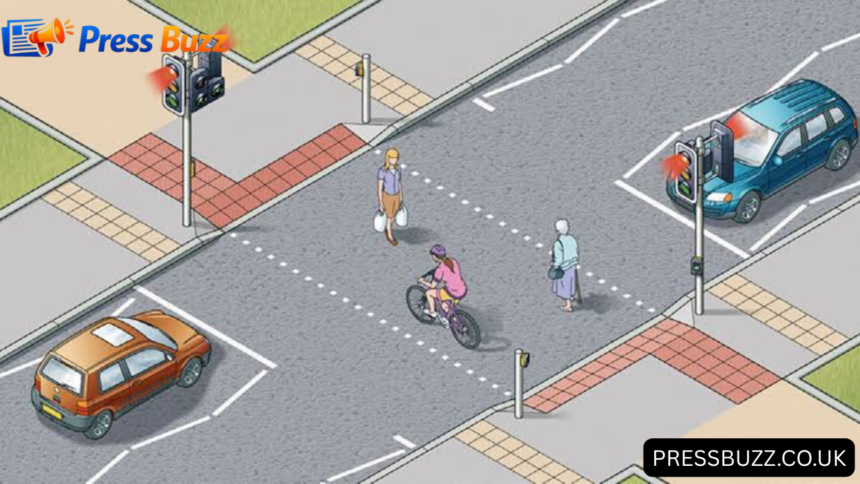
A toucan crossing is an important part of the UK’s road network, helping pedestrians and cyclists cross busy roads safely and efficiently. Unlike traditional pedestrian crossings, this crossing is specifically designed to accommodate both people walking and those riding bicycles. It is commonly found along cycle routes, near schools, parks and busy urban streets where shared travel is encouraged.
- What Is a Toucan Crossing?
- How Does a Toucan Crossing Work?
- Who Can Use a Toucan Crossing?
- Toucan Crossing vs Puffin Crossing
- Pelican vs Puffin vs Toucan Crossing
- UK Highway Code Rules for Toucan Crossings
- Common Places You Will Find Toucan Crossings
- Common Misunderstandings About Toucan Crossings
- Tips for Passing Your UK Driving Theory Test
- Conclusion
- Frequently Asked Questions
Understanding how a toucan crossing works is useful for drivers, cyclists, learner drivers and pedestrians alike. Whether you are studying for the UK driving theory test or simply want to improve your road safety knowledge, learning about this type of crossing helps you make better decisions and travel with greater confidence on Britain’s roads.
What Is a Toucan Crossing?
A toucan crossing is a light-controlled road crossing that allows pedestrians and cyclists to cross together without cyclists needing to dismount. The name comes from the phrase “two can cross”, highlighting that two different groups of road users are permitted to use the crossing at the same time. It is wider than a standard pedestrian crossing to provide enough space for everyone.
These crossings are becoming increasingly common throughout the UK because they support sustainable transport and improve safety. Most are located on shared-use pathways, near schools, public parks and popular cycling routes. Their clear traffic signals and dedicated cycle symbols make them easy to recognise, even for people who have never used one before.
A toucan crossing operates through traffic lights that stop vehicles while pedestrians and cyclists safely cross the road together. Both users press the crossing button and wait until the pedestrian and bicycle symbols illuminate green. This coordinated system helps reduce conflicts between different road users and keeps traffic moving in an organised manner.
Because cyclists are allowed to remain on their bicycles, journeys become smoother and more convenient. Local councils often install toucan crossings where cycling is heavily promoted as an environmentally friendly mode of transport. Their design encourages active travel while maintaining high standards of road safety for everyone.
How Does a Toucan Crossing Work?
A toucan crossing uses standard traffic lights combined with dedicated pedestrian and cyclist signals. When someone presses the crossing button, the system waits for a safe opportunity before changing the vehicle traffic lights to red. Once traffic has stopped, both the green walking figure and the green bicycle symbol appear, allowing users to cross together safely.
Unlike older crossing systems, drivers do not encounter a flashing amber signal after the crossing phase. Instead, they remain stationary until the traffic lights return to green. This straightforward process reduces uncertainty and ensures pedestrians and cyclists have enough time to complete their crossing without feeling pressured by approaching vehicles.
Modern toucan crossings often include advanced sensors that monitor movement across the crossing. If someone is still crossing when the signal would normally change, the system may extend the crossing time slightly to improve safety. This technology helps protect vulnerable road users and supports efficient traffic management.
The crossing area itself is usually marked with clear road signs and wider pavement access points. These features make it easier for wheelchair users, parents with pushchairs and cyclists travelling in groups to cross comfortably. Good visibility and logical road markings help everyone understand how the crossing should be used.
Who Can Use a Toucan Crossing?
One of the biggest advantages of a toucan crossing is that it serves more than one type of road user. Pedestrians and cyclists can cross together without needing separate facilities, making journeys simpler and safer. Cyclists are permitted to ride across instead of getting off their bicycles, saving time while maintaining a smooth flow of movement.
People using mobility scooters, wheelchairs or pushchairs can also use the crossing comfortably because of its wider design. The additional space allows everyone to travel safely without feeling crowded. This inclusive layout reflects modern road planning that aims to accommodate users with different mobility needs.
Drivers approaching a toucan crossing should always remain alert and prepare to stop if the traffic lights change. They must give pedestrians and cyclists enough time to complete their crossing before moving away. Paying attention to road signs and signals helps reduce the risk of collisions and improves overall traffic safety.
Cyclists should also ride responsibly while using the crossing. Although they do not need to dismount, they should travel at a sensible speed and remain aware of pedestrians nearby. Mutual respect between all road users creates a safer and more pleasant travelling experience.
Toucan Crossing vs Puffin Crossing
Many people ask why a toucan crossing is different from a puffin crossing. The main distinction is that a toucan crossing allows both cyclists and pedestrians to cross together, whereas a puffin crossing is designed only for pedestrians. Cyclists using a puffin crossing are generally expected to dismount before crossing the road.
Another noticeable difference is the overall width of the crossing. Toucan crossings provide additional space to accommodate bicycles safely, while puffin crossings are narrower because they are intended mainly for people walking. Both crossings use intelligent traffic technology, but their layouts reflect the different needs of their users.
Puffin crossings are fitted with sensors that monitor pedestrians waiting to cross and those already on the crossing. This technology adjusts signal timings to improve safety and traffic flow. Toucan crossings may also use similar technology while incorporating dedicated cycle signals to support shared use.
Knowing these differences is especially useful for learner drivers preparing for their theory test. Questions comparing different crossing types frequently appear in exams, making it important to understand which users each crossing is designed for and how the traffic signals operate.
Pelican vs Puffin vs Toucan Crossing
Understanding the differences between pelican, puffin and toucan crossings helps drivers become more confident and aware on UK roads. A pelican crossing is one of the older designs and features a flashing amber phase that allows drivers to proceed when the crossing is clear. Although still used, newer crossings have gradually replaced it in many locations.
A puffin crossing improves upon the pelican crossing by using intelligent sensors that detect pedestrians and adjust crossing times automatically. This technology helps prevent unnecessary delays while improving safety for people crossing the road. Puffin crossings are now widely used across towns and cities throughout the UK.
A toucan crossing builds on the same principles but includes cyclists as well as pedestrians. Its wider crossing area, bicycle signals and shared-use design make it ideal for locations where cycling is encouraged. It supports active travel while reducing conflicts between vehicles and vulnerable road users.
Remembering the purpose of each crossing is easier when you focus on who can use it. Pelican crossings are traditional pedestrian crossings, puffin crossings are intelligent pedestrian crossings, and toucan crossings allow both pedestrians and cyclists to cross together. This simple comparison makes recognising each crossing much easier when travelling around the UK.
UK Highway Code Rules for Toucan Crossings
The UK Highway Code provides clear guidance on using a toucan crossing safely. Drivers must stop when the traffic lights show red and remain stationary until the signal changes back to green. They should never attempt to drive through while pedestrians or cyclists are still crossing, even if the crossing appears almost clear. Following these rules helps reduce accidents and keeps traffic flowing in an orderly manner.
Pedestrians and cyclists also have responsibilities when using the crossing. They should wait for the green pedestrian and bicycle signals before entering the road and avoid crossing during the red phase. Cyclists should ride carefully, remain aware of pedestrians beside them and avoid travelling at excessive speeds. Respecting these simple rules makes the crossing safer for everyone.
Road users should remember that patience is an important part of road safety. Rushing across the road or ignoring traffic signals increases the risk of collisions. Whether travelling by car, bicycle or on foot, following the Highway Code ensures that toucan crossings continue to provide a reliable and safe crossing point throughout the UK.
Modern traffic systems are designed to balance vehicle movement with pedestrian and cyclist safety. By understanding how traffic signals work and reacting correctly, everyone contributes to smoother journeys and fewer road incidents. Learning these rules is particularly valuable for learner drivers preparing for their practical and theory tests.
Common Places You Will Find Toucan Crossings
A toucan crossing is commonly installed in places where both walking and cycling are encouraged. You will often find them near public parks, schools, universities and busy cycle routes where large numbers of people need to cross roads safely. Their design supports shared travel and helps connect residential areas with shopping centres, transport hubs and recreational spaces.
Local councils frequently choose toucan crossings for roads with dedicated cycling infrastructure. They improve access to shared-use pathways while reducing the need for cyclists to dismount. This makes journeys quicker and encourages more people to choose environmentally friendly methods of transport instead of relying solely on cars.
Many town and city centres also feature toucan crossings because of increasing investment in sustainable transport. As cycling continues to grow in popularity across the UK, these crossings play an important role in reducing traffic congestion and improving road safety for vulnerable users. Their presence reflects the country’s commitment to greener travel.
You may also notice toucan crossings close to railway stations, business districts and leisure facilities where pedestrian and cycle traffic is particularly high. Their strategic placement helps separate vehicles from people crossing the road, creating a safer and more organised transport network for everyone.
Common Misunderstandings About Toucan Crossings
Despite being widely used, there are still several misunderstandings about a toucan crossing. One common myth is that cyclists always have priority over pedestrians. In reality, both groups share the crossing equally and should remain considerate of one another. Safe behaviour and mutual awareness are essential to ensure everyone crosses comfortably and without conflict.
Another misconception is that cyclists must dismount before using the crossing. Unlike some other pedestrian crossings, cyclists are specifically allowed to ride across a toucan crossing. This is one of its defining features and the reason it differs from several other crossing types found on UK roads.
Some people also believe that motorcycles are allowed to use toucan crossings because bicycles are permitted. However, motorcycles must remain on the road and obey the standard traffic signals. The crossing is designed only for pedestrians, cyclists and approved mobility users, making it important to understand who is authorised to use it.
Confusion can also arise between toucan, pelican and puffin crossings because they all use traffic lights. Learning the purpose and design of each crossing helps drivers, cyclists and pedestrians respond correctly when travelling, reducing mistakes that could compromise road safety.
Tips for Passing Your UK Driving Theory Test
Questions about a toucan crossing regularly appear in the UK driving theory test because recognising different crossing types is a key part of safe driving. Understanding how these crossings operate, who can use them and the correct driver response will improve your confidence during the exam and while driving on real roads.
A useful revision technique is to compare pelican, puffin and toucan crossings side by side. Learning their individual features makes it much easier to remember which crossing allows cyclists to ride across and which crossings are designed only for pedestrians. Visual comparisons often make revision quicker and more effective.
Practice theory test questions that focus on road signs, traffic signals and crossing layouts. Many official revision resources include realistic scenarios involving toucan crossings, helping learners become familiar with situations they may encounter during both the theory and practical driving tests.
One easy memory tip is to remember that the word “toucan” sounds like “two can”. This reminds learners that two groups, pedestrians and cyclists, can cross together. Simple memory techniques like this often make it easier to recall important information during the examination.
Conclusion
A toucan crossing is an excellent example of how modern road design improves safety while encouraging sustainable transport. By allowing pedestrians and cyclists to cross together safely, it reduces delays, supports active travel and creates a more efficient road network. Its clear signals and wider layout make it suitable for a wide range of users throughout the UK.
Whether you are a driver, cyclist, pedestrian or learner preparing for your driving test, understanding how a toucan crossing works is essential. Knowing the differences between pelican, puffin and toucan crossings helps you make better decisions on the road and contributes to safer journeys for everyone.
As more towns and cities invest in cycling infrastructure, toucan crossings are likely to become even more common. Familiarising yourself with their purpose and operation today will help you navigate UK roads confidently for years to come while supporting safer and more environmentally friendly transport choices.
By following the Highway Code and respecting all traffic signals, every road user can play a part in reducing accidents and improving road safety. A small amount of knowledge about different crossing types can make a significant difference to everyday travel.
Frequently Asked Questions
What is a toucan crossing?
A toucan crossing is a signal-controlled crossing that allows pedestrians and cyclists to cross the road together safely.
What does toucan crossing mean?
The name comes from the phrase “two can cross”, referring to pedestrians and cyclists using the crossing at the same time.
What is a toucan crossing UK?
It is a UK road crossing designed for both pedestrians and cyclists, commonly found on shared-use routes and cycle networks.
Who can use a toucan crossing?
Pedestrians, cyclists, wheelchair users, mobility scooter users and people with pushchairs can all use the crossing.
Why is a toucan crossing different from a puffin crossing?
A toucan crossing allows cyclists and pedestrians to cross together, while a puffin crossing is intended only for pedestrians.
What is the difference between a pelican crossing and a toucan crossing?
A pelican crossing is for pedestrians only, whereas a toucan crossing is shared by pedestrians and cyclists.
Can cyclists ride across a toucan crossing?
Yes. Cyclists are allowed to remain on their bicycles while crossing.
Do drivers have to stop at a toucan crossing?
Yes. Drivers must stop when the traffic lights show red and wait until they change back to green.
Where are toucan crossings usually found?
They are commonly located near parks, schools, cycle routes, shared-use paths and busy urban areas.
Are toucan crossings included in the UK driving theory test?
Yes. They are frequently covered in the UK driving theory test and are an important part of learning road safety.
Also Read: pelican crossing
